Tarot vs. Oracle Cards: What's the Difference?
Introduction
The world of divination and spiritual guidance has long captivated human curiosity. Among the most popular tools used for insight, self-reflection, and guidance are tarot cards and oracle cards. While these two systems are often mentioned together and sometimes confused with one another, they represent distinct approaches to divination with their own unique characteristics, histories, and methodologies. Whether you're a seasoned practitioner or someone just beginning to explore these spiritual tools, understanding the differences between tarot and oracle cards is essential for choosing the right system for your needs and maximizing the benefits you can derive from either practice.
This comprehensive guide will explore the fundamental differences between tarot and oracle cards, examining their origins, structures, interpretations, and applications. By the end of this exploration, you'll have a clear understanding of what makes each system unique and how to determine which might be best suited for your personal spiritual journey.
The Historical Origins of Tarot Cards
The Birth of Tarot in Medieval Europe
Tarot cards have a fascinating and well-documented history that stretches back centuries. The earliest known tarot decks emerged in Italy during the 15th century, initially created as playing cards for the wealthy aristocracy. These early decks, known as "carte da trionfi" or triumph cards, were used for a game called tarocchi, which was popular among the Italian nobility. The decks were beautifully illustrated and often commissioned by wealthy families, making them luxury items rather than tools for divination.
The structure of these early tarot decks was remarkably similar to what we see today. They contained 78 cards divided into two main sections: the Major Arcana and the Minor Arcana. The Major Arcana consisted of 22 cards depicting significant archetypal figures and concepts, while the Minor Arcana contained 56 cards organized into four suits, much like modern playing cards.
Evolution into a Divination Tool
It wasn't until the 18th century that tarot cards began to be used for divination purposes. French occultists and mystics started to assign symbolic meanings to the cards, drawing connections between the imagery and spiritual concepts. This marked a significant shift in how tarot was perceived and used. The practice gained momentum throughout Europe, particularly in France and England, where various occult societies and esoteric traditions incorporated tarot into their spiritual practices.
By the 19th and 20th centuries, tarot had become firmly established as a divination tool. Influential figures in the occult movement, such as Arthur Edward Waite and Pamela Colman Smith, created the Rider-Waite deck in 1909, which became one of the most popular and influential tarot decks ever created. This deck standardized many of the symbolic interpretations that are still used today and made tarot more accessible to the general public.
The Standardization of Tarot
One of the most important aspects of tarot's development was the standardization of its structure and meanings. Unlike oracle cards, which we'll discuss later, tarot has maintained a consistent framework for over five centuries. This consistency means that regardless of which tarot deck you purchase, you'll find the same 78 cards with the same basic structure and similar interpretations. This standardization has allowed for the development of comprehensive guidebooks, courses, and a global community of practitioners who can communicate using a shared symbolic language.
The Historical Origins of Oracle Cards
A Modern Spiritual Tool
Oracle cards, by contrast, are a much more recent development in the world of divination. While tarot has centuries of documented history, oracle cards as we know them today emerged primarily in the late 20th century. The rise of oracle cards coincided with the New Age movement of the 1970s and 1980s, a period characterized by increased interest in alternative spirituality, personal development, and holistic wellness.
Unlike tarot, which evolved from playing cards into a divination system, oracle cards were created specifically as spiritual tools from their inception. They were designed with the intention of providing guidance, inspiration, and spiritual insight. This fundamental difference in origin has shaped how oracle cards function and how they're perceived by practitioners.
The Expansion of Oracle Card Decks
Since their emergence, oracle cards have experienced explosive growth in popularity and diversity. Thousands of different oracle card decks have been created, each with its own unique theme, artwork, and system of interpretation. This proliferation reflects the flexibility and adaptability of the oracle card format. Creators have developed oracle decks focused on everything from angels and goddesses to animals, crystals, chakras, and countless other spiritual and metaphysical concepts.
The accessibility and creativity associated with oracle cards have made them particularly appealing to modern spiritual seekers. Many people find oracle cards less intimidating than tarot because they don't carry the same historical weight or complex symbolic systems. Additionally, the variety of oracle decks available means that practitioners can choose decks that resonate with their personal spiritual beliefs and interests.
Structural Differences Between Tarot and Oracle Cards
The Fixed Structure of Tarot
One of the most significant differences between tarot and oracle cards lies in their structural organization. Tarot decks have a fixed, standardized structure that has remained consistent for centuries. Every traditional tarot deck contains exactly 78 cards organized into two main sections: the Major Arcana and the Minor Arcana.
The Major Arcana consists of 22 cards numbered from 0 to 21. These cards represent significant life lessons, archetypal energies, and major themes. Cards in the Major Arcana include The Fool, The Magician, The High Priestess, The Empress, The Emperor, The Hierophant, The Lovers, The Chariot, Strength, The Hermit, Wheel of Fortune, Justice, The Hanged Man, Death, Temperance, The Devil, The Tower, The Star, The Moon, The Sun, Judgement, and The World. Each of these cards carries profound symbolic meaning and represents a stage in the Fool's Journey, a metaphorical journey through life and spiritual development.
The Minor Arcana consists of 56 cards divided into four suits: Wands (or Rods), Cups, Swords, and Pentacles (or Coins). Each suit contains 14 cards: ten numbered cards (Ace through Ten) and four court cards (Page, Knight, Queen, and King). These cards represent everyday situations, challenges, and experiences that complement the deeper spiritual lessons of the Major Arcana.
The Flexible Structure of Oracle Cards
Oracle cards, by contrast, have no standardized structure. Different oracle decks can contain anywhere from 20 to 60 or more cards, depending on the creator's vision. There are no universal rules governing how many cards should be in an oracle deck or how they should be organized. This flexibility is one of the defining characteristics of oracle cards and contributes to their widespread appeal and diversity.
Because oracle cards lack a fixed structure, each deck is essentially its own system. A deck focused on angels might have cards representing different archangels and angelic concepts. A deck based on animal wisdom might feature different animals and the qualities they represent. A crystal-themed oracle deck might include cards for various crystals and their metaphysical properties. This means that learning one oracle deck doesn't necessarily prepare you to read another oracle deck, as each system has its own unique framework and meanings.
Implications of Structural Differences
The structural differences between tarot and oracle cards have significant implications for how they're used and interpreted. The fixed structure of tarot allows for complex spreads and detailed interpretations based on card positions and relationships. The consistency of tarot means that practitioners can develop deep expertise and understanding over time, as they're working with the same 78 cards and their established meanings.
Oracle cards, with their flexible structure, are often used in simpler spreads or even single-card draws. The lack of standardization means that oracle readings tend to be more intuitive and less reliant on memorized meanings. Many oracle card practitioners emphasize the importance of intuition and personal interpretation when working with oracle cards, as the meanings can vary significantly from deck to deck.
Symbolic Complexity and Interpretation
The Depth of Tarot Symbolism
Tarot cards are renowned for their rich symbolic content and layered meanings. Each card in a tarot deck contains multiple levels of symbolism that can be interpreted in various ways depending on the context of the reading and the position of the card in a spread. This complexity is one of the reasons why tarot has attracted serious students and practitioners who spend years developing their understanding of the cards.
The symbolism in tarot draws from various traditions, including numerology, astrology, Kabbalah, alchemy, and mythology. For example, the number of a card in the Minor Arcana carries significance. Aces represent new beginnings and potential, Twos represent duality and balance, Threes represent creativity and growth, and so on. The suit of a card also carries meaning: Wands are associated with fire, passion, and creativity; Cups are associated with water, emotions, and relationships; Swords are associated with air, intellect, and conflict; and Pentacles are associated with earth, material matters, and physical reality.
The Major Arcana cards contain even deeper symbolism. Each card represents an archetypal energy and a stage in human development. The imagery on these cards is intentionally complex, often containing numerous symbols that can be analyzed and interpreted. For instance, The Magician card typically shows a figure with one hand pointing upward and one hand pointing downward, representing the connection between the spiritual and material worlds. The infinity symbol often appears above the Magician's head, representing unlimited potential and the cyclical nature of existence.
The Intuitive Nature of Oracle Card Interpretation
Oracle cards, while still containing symbolic imagery, tend to be more straightforward and intuitive in their interpretation. The meanings of oracle cards are typically provided in accompanying guidebooks, and these meanings are often more literal and less layered than tarot interpretations. This doesn't mean oracle cards lack depth, but rather that they approach meaning differently.
Many oracle card creators intentionally design their cards to be accessible and easy to interpret, even for beginners. The artwork is often clear and evocative, designed to trigger intuitive responses and personal associations. Rather than relying on complex symbolic systems, oracle cards often work through direct imagery and emotional resonance. An oracle card featuring a butterfly, for example, might simply represent transformation or change, without the layers of numerological and astrological significance that a tarot card might carry.
This difference in approach reflects the different purposes of the two systems. Tarot is designed to provide deep, nuanced guidance that requires study and interpretation. Oracle cards are designed to provide clear, accessible messages that can be understood intuitively. Neither approach is inherently better; they simply serve different needs and appeal to different types of practitioners.
Reading Methodologies and Spreads
Tarot Spreads and Positions
Tarot readings typically involve laying out cards in specific patterns called spreads. Each position in a spread has a particular meaning, and the interpretation of a card depends not only on the card itself but also on its position in the spread. This positional meaning adds another layer of complexity and nuance to tarot readings.
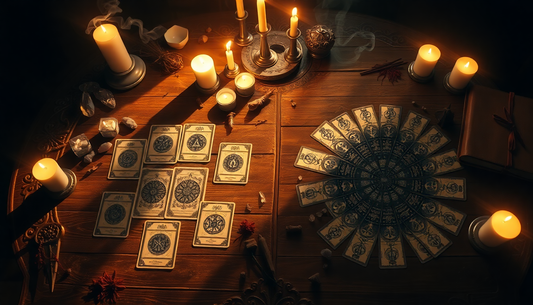
Some of the most common tarot spreads include the three-card spread, where three cards are drawn to represent past, present, and future, or situation, action, and outcome. The Celtic Cross spread is one of the most popular and complex spreads, consisting of ten cards arranged in a specific pattern, with each position representing different aspects of a situation. Other popular spreads include the five-card spread, the seven-card spread, and the Horseshoe spread.
The complexity of tarot spreads allows for detailed and comprehensive readings. A skilled tarot reader can provide extensive guidance by analyzing not only the individual cards but also their relationships to one another, their positions in the spread, and how they interact with the surrounding cards. This complexity is one of the reasons why tarot reading is often considered an art form that requires significant study and practice to master.
Oracle Card Readings and Simplicity
Oracle card readings tend to be simpler and more straightforward than tarot readings. While oracle cards can certainly be used in spreads, they're often used in single-card or three-card draws. The simplicity of oracle card readings makes them accessible to beginners and allows for quick, intuitive guidance.
Many people use oracle cards for daily guidance by drawing a single card each morning to set an intention or receive a message for the day. Others use oracle cards in meditation or as a tool for journaling and self-reflection. Some practitioners use oracle cards in combination with tarot, drawing an oracle card after a tarot reading to provide additional clarification or inspiration.
The flexibility of oracle card readings means that practitioners can develop their own methods and approaches. There's no "correct" way to read oracle cards, which appeals to many people who prefer a more intuitive and less structured approach to divination. This flexibility also makes oracle cards particularly useful for people who are just beginning to explore divination and want to start with something less complex than tarot.
The Role of Intuition
Intuition in Tarot Reading
While tarot reading does rely on established meanings and interpretations, intuition plays an important role in the process. A skilled tarot reader doesn't simply recite the meanings of the cards; instead, they use their intuition to interpret how those meanings apply to the specific situation and question at hand. The reader considers the context of the reading, the relationship between the cards, and their own intuitive impressions to provide guidance that's relevant and meaningful.
Many experienced tarot readers emphasize that intuition is essential to effective tarot reading. While learning the traditional meanings of the cards is important, the ability to sense deeper meanings and make intuitive connections between cards is what elevates a reading from a simple recitation of meanings to a genuine spiritual guidance session. This balance between learned knowledge and intuitive insight is one of the things that makes tarot reading both challenging and rewarding.
Intuition in Oracle Card Reading
Intuition is even more central to oracle card reading than it is to tarot reading. Because oracle cards lack the standardized symbolic system of tarot, practitioners are encouraged to rely heavily on their intuition when interpreting the cards. Many oracle card guidebooks explicitly state that the meanings provided are suggestions rather than definitive interpretations, and that readers should trust their intuitive responses to the cards.
This emphasis on intuition makes oracle cards particularly appealing to people who prefer a more personal and less structured approach to divination. Rather than learning a complex system of meanings, oracle card practitioners develop a relationship with their deck based on intuitive understanding and personal association. Over time, a practitioner may develop their own system of meanings for their oracle cards that's unique to them and their spiritual practice.
Accuracy and Reliability
The Consistency of Tarot
One of the advantages of tarot's standardized structure is that it provides a consistent framework for interpretation. Because tarot has been used for divination for centuries and has a well-established system of meanings, many practitioners find tarot readings to be reliable and accurate. The consistency of tarot means that a reading can be verified or cross-checked by consulting established tarot references and guidebooks.
Additionally, the complexity of tarot allows for nuanced and detailed readings that can address specific questions and situations. The ability to use different spreads and positions to explore different aspects of a situation means that tarot can provide comprehensive guidance that addresses multiple dimensions of a problem or question.
The Subjectivity of Oracle Cards
Oracle cards, with their emphasis on intuition and personal interpretation, are inherently more subjective than tarot. The accuracy of an oracle card reading depends heavily on the practitioner's intuitive abilities and the depth of their connection with their deck. This subjectivity doesn't make oracle cards unreliable; rather, it means that the reliability of an oracle card reading depends more on the individual practitioner than on the system itself.
Many people find oracle cards to be remarkably accurate and helpful, particularly when they're used by practitioners with strong intuitive abilities. However, because the meanings are less standardized and more dependent on personal interpretation, oracle card readings can vary significantly from one practitioner to another, even when using the same deck.
Choosing Between Tarot and Oracle Cards
Tarot for Detailed Guidance
Tarot is an excellent choice for people who want detailed, comprehensive guidance on complex situations. If you're facing a significant decision or challenge and want to explore multiple dimensions of the situation, tarot's complex structure and established meanings can provide valuable insights. Tarot is also ideal for people who enjoy learning and studying, as the system is deep enough to support years of continued learning and development.
Tarot is particularly useful for exploring the root causes of situations, understanding patterns and cycles, and gaining insight into the spiritual lessons and growth opportunities present in your life. The Major Arcana cards, in particular, can help you understand the bigger picture and the archetypal forces at work in your life.
Oracle Cards for Accessibility and Inspiration
Oracle cards are an excellent choice for people who are just beginning to explore divination and want something less intimidating than tarot. They're also ideal for people who prefer a more intuitive, less structured approach to spiritual guidance. Oracle cards are particularly useful for daily inspiration, setting intentions, and receiving quick, accessible messages.
Oracle cards are also excellent for people who want to explore specific themes or interests. Whether you're interested in angels, animals, crystals, goddesses, or any other spiritual concept, there's likely an oracle deck available that focuses on that theme. This specificity allows you to choose a deck that resonates deeply with your personal spiritual beliefs and interests.
Using Both Systems
Many experienced practitioners use both tarot and oracle cards, choosing the system that best fits their needs in any given situation. Some people use tarot for in-depth readings and oracle cards for daily guidance. Others use oracle cards to clarify or expand upon tarot readings. The two systems complement each other well, and using both can provide a more comprehensive approach to divination and spiritual guidance.
The Learning Curve
Mastering Tarot
Learning